
You upgraded the ERP. Have you upgraded how people use it?
The JD Edwards interface evolved from forms to web, mobile, APIs and Orchestrations. Agentic AI is the next interface layer, not a replacement for EnterpriseOne.
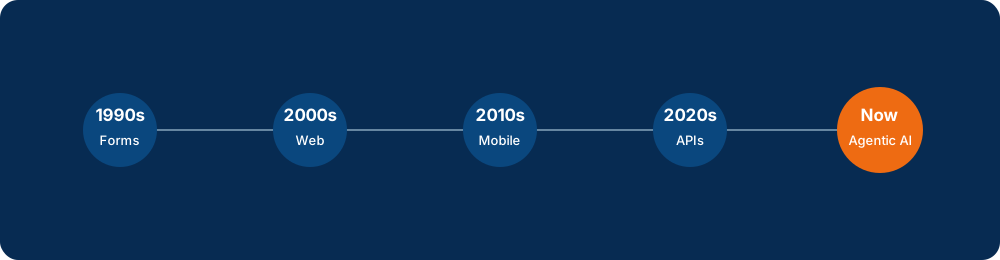
1990s — Forms
Users worked inside application screens. The system defined both the workflow and the interface.
2000s — Web client
EnterpriseOne moved the same business core into a browser-centric experience.
2010s — Mobile and Orchestrations
Useful operations escaped the full desktop interface and became callable, composable services.
2020s — APIs and automation
More work moved into integrations, scheduled processes and task-specific clients.
Now — Agentic AI
The interface can become conversational and goal-oriented. The important architectural choice is whether that convenience preserves the permissions, controlled operations and system-of-record discipline that made the previous layers safe.
Where the next interface layer lives
BrainStorm is the conversational/agentic layer, Composer supplies governed reusable capabilities, and JDE Citizen Developer contains the broader architectural reading behind this evolution.